


The Billionaire Escape Plan — Why the Ultra-Rich Are Building Underground Cities
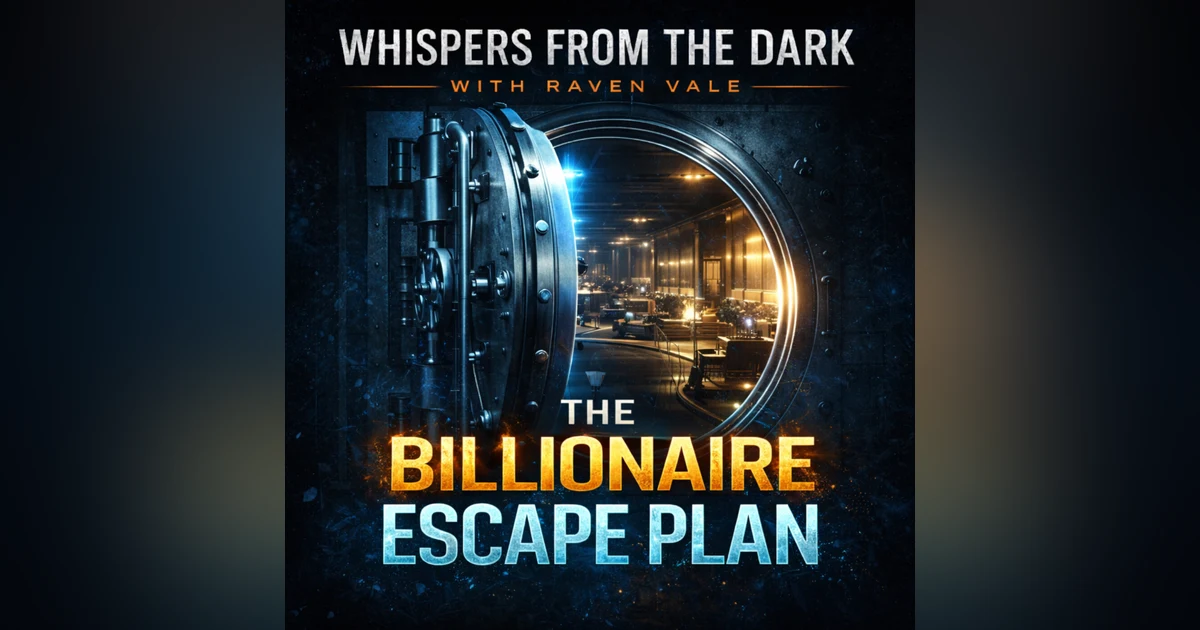


There is a particular kind of door you will never see.
It is not marked on any map. It is not guarded by visible security. It is buried — beneath estates, beneath mountains, beneath fields where no structure is visible for miles in any direction. Behind it are rooms stocked for decades. Water systems independent of municipal infrastructure. Air filtration rated for nuclear fallout. Medical facilities. Hydroponic farms. Artificial sunlight cycling on a programmed clock.
And someone very wealthy is already holding the key.
In this episode of Whispers From the Dark, host Raven Vale investigates the billionaire bunker phenomenon — the documented, large-scale movement among the world's ultra-wealthy to build survival infrastructure at a scale human history has never seen before.
This is not speculation assembled from anonymous sources. Former intercontinental ballistic missile silos in the American Midwest have been purchased and converted into luxury survival condominiums, their reinforced concrete walls now protecting million-dollar residential units. Remote estates in New Zealand — chosen specifically for geographic isolation and political stability — have attracted public attention when their strategic purpose became apparent. Silicon Valley executives have acquired land in regions identified by analysts as geopolitically stable. Private islands have been outfitted with independent power generation, desalination systems, satellite communication, and agricultural infrastructure sufficient to sustain their inhabitants indefinitely.
Raven opens with the history of fortress psychology — the consistent, cross-cultural pattern by which power has always built walls when uncertainty rises — and traces that impulse from medieval castles and mountain monasteries directly into the present, where the same psychology expresses itself in biometric entry systems and underground swimming pools.
She examines the psychology of extreme preparation: why people with access to sophisticated global risk analysis think differently about low-probability, high-consequence scenarios than the rest of us do, and how that thinking produces what looks, from the outside, like either extraordinary rationality or extraordinary anxiety — or both simultaneously.
The episode investigates what luxury bunkers actually look like — the hydroponic farms and surgical suites and behavioral psychology-informed architectural choices and simulated skylines — and asks what it reveals about human values when survival is engineered not merely to preserve biological function but to preserve a specific quality of life.
Raven examines the industry that has grown up around elite survival preparation: the security consultants, crisis forecasters, and subterranean architects who profit from sustained anxiety, and the way resilience has become a new form of status competition among people whose previous competitive landscape was yachts and private jets.
The episode confronts the social contract problem at the center of bunker culture: the implicit lifeboat mentality revealed by a class of people who have quietly built exits while the general population they share civilization with has not been offered the same option. The existence of the plan — not its execution, but its existence — is what erodes the social trust that complex societies depend on.
It draws historical parallels to Cold War command bunkers, plague-era noble retreats, and revolutionary-era capital flights — and notes that what is different now is not the impulse but the technology, which makes the option genuinely permanent rather than temporary.
And it closes with the question that survives all the economics and psychology and history: when the door closes, and the air systems engage, and the screens switch on to simulate a sunrise over a coast you selected from a catalog — is that safety?
Or is it exile from the one thing that cannot be engineered underground?
This episode is for anyone who has ever: — Read about billionaire bunkers and wondered what they actually know — Felt the particular unease of realizing that not everyone is in the same boat — Asked whether the ultra-rich's preparation reveals something about how fragile civilization actually is — Wanted to understand the psychology behind extreme wealth and extreme risk aversion — Sensed that the social contract is under strain in ways that are not being spoken about directly
The door is already there.
Whether it ever needs to close is the question still being written.
Whispers From the Dark — available wherever you listen to podcasts.
- billionaire bunkers
- luxury survival bunkers
- ultra rich doomsday prep
- billionaire escape plan
- underground bunkers wealthy
- doomsday bunker billionaire
- elite survival bunkers
- why billionaires are building bunkers
- billionaire New Zealand bunkers
- luxury underground compound
- missile silo converted bunker
- private island survival infrastructure
- billionaire resilience planning
- doomsday preppers wealthy
- elite survival architecture
- survival bunker inside look
- billionaire fear collapse
- social contract billionaires
- underground bunker design luxury
- catastrophe preparation ultra rich
- bunker as status symbol
- billionaire escape New Zealand
- geopolitical risk wealthy
- asymmetric risk billionaires
- digital fortress cybersecurity wealthy
- what do billionaire bunkers look like inside
- why are billionaires buying property in New Zealand
- psychology of extreme preparation among the wealthy
- how fear became a commodity for the ultra rich
- what the billionaire bunker trend says about society
- is civilization more fragile than we think
- what happens to the social contract when elites escape
- luxury survival facility behavioral psychology design
- Cold War bunker parallels to billionaire survival planning
- can a self-sustaining underground facility support human life indefinitely
- Why are billionaires secretly building luxury survival bunkers underground?
- What do billionaire doomsday bunkers actually look like inside?
- Why are tech billionaires buying land and estates in New Zealand?
- How do ultra-rich preppers think differently about catastrophic risk?
- What is the psychology behind extreme wealth and doomsday preparation?
- How has fear and survival preparation become a status symbol for billionaires?
- What former missile silos have been converted into luxury survival condominiums?
- How does billionaire bunker culture erode the social contract?
- What is the difference between billionaire resilience planning and conspiracy?
- How does asymmetric risk thinking drive billionaire preparation for collapse scenarios?
- What historical parallels exist between billionaire bunkers and Cold War survival shelters?
- Can a private underground facility sustain human life for years without surface infrastructure?
- What role do behavioral psychologists play in designing elite survival bunkers?
- How are private islands being used as self-contained survival infrastructure by the wealthy?
- What does billionaire survival architecture reveal about the fragility of modern civilization?
- Is billionaire bunker building a rational response to real risk or a self-reinforcing anxiety?
- What would life actually be like inside a luxury underground survival compound?
- How has the luxury bunker industry grown around elite fear and uncertainty?
- What does it mean for democracy when the wealthy can escape scenarios the public cannot?
- Why do the most powerful people prepare to disappear when civilization becomes unstable?
- billionaire bunkers
- luxury doomsday bunker
- billionaire escape plan
- underground survival compound
- elite preppers
- missile silo bunker
- billionaire New Zealand
- doomsday prep wealthy
- survival bunker inside
- billionaire collapse prep
- social contract elites
- private island survival
- ultra rich preppers
- bunker status symbol
- billionaire resilience planning
Why are billionaires building luxury survival bunkers? A: Billionaires building luxury survival bunkers are primarily responding to asymmetric risk thinking — the practice of preparing for low-probability, high-consequence scenarios regardless of their expected likelihood, because the cost of preparation is trivial relative to extreme wealth and the cost of being unprepared for a catastrophic event is unimaginable. People at the highest levels of wealth often have access to sophisticated geopolitical, climate, and security risk analysis that produces a clearer picture of systemic fragility than the general public typically receives. They are also participating in a growing industry of elite survival preparation that has made resilience architecture a new form of status competition.
What do luxury billionaire bunkers look like inside? A: Modern elite survival facilities are architectural projects designed by firms applying luxury residential standards to underground construction. They typically include hydroponic farming systems producing fresh food year-round, medical facilities equipped for surgery and chronic care, fitness infrastructure including pools and climbing walls, and advanced air filtration rated for nuclear, biological, and chemical contaminants. Psychological wellbeing features are prominent: screens simulating windows with realistic daylight cycling, ambient soundscapes mimicking natural outdoor environments, and architectural proportions designed in consultation with behavioral psychologists to minimize the subjective experience of confinement.
Why are billionaires buying property in New Zealand? A: New Zealand has attracted significant interest from ultra-wealthy individuals as a survival and resilience destination due to its geographic isolation in the South Pacific, political stability, low population density, agricultural capacity, and distance from the regions considered most likely to experience severe consequences in major geopolitical, climate, or conflict scenarios. The country's remoteness makes it logistically difficult to access but also logistically protected from the most catastrophic outcomes being hedged against. Several tech billionaires have publicly acknowledged owning property in New Zealand, and the trend has been covered extensively in financial and technology media.
What is the social contract problem with billionaire bunkers? A: The social contract — the implicit agreement that holds complex societies together — rests on the assumption of shared fate: that decision-makers and the populations they affect face the same consequences, and that this shared exposure enforces accountability. Billionaire survival architecture represents a potential exit from that shared fate: a class of people who have quietly built the option to survive scenarios that the general population has no equivalent preparation for. Even if the option is never used, its existence changes the implicit relationship between the ultra-wealthy and the societies they inhabit, potentially eroding the trust and cooperation that complex social systems depend on.
What are the historical parallels to billionaire bunker building? A: The pattern of powerful individuals building separate survival infrastructure in periods of uncertainty is consistent throughout history. During the Cold War, governments built command bunkers to preserve leadership through nuclear exchanges, while wealthy private individuals constructed fallout shelters unavailable to the general population. During medieval plague epidemics, nobility retreated to isolated country estates while urban populations faced epidemic disease without equivalent options. During political revolutions, wealthy elites fled capital cities when the social order shifted past the point where their position provided protection. What distinguishes the current moment is the technology — modern engineering allows genuinely permanent, self-contained underground ecosystems rather than temporary refuges.
Is billionaire bunker building rational or fear-driven? A: Both. The decision to build survival infrastructure is rational within the framework of asymmetric risk thinking: if you have the resources to eliminate a category of existential risk at a cost that is trivial relative to your wealth, and the consequence of that risk materializing without preparation is catastrophic, the preparation is logically sound regardless of its probability. However, the elite survival industry also creates a self-reinforcing anxiety ecosystem — where the existence of preparation infrastructure creates demand for more, and its prevalence among the ultra-wealthy creates social pressure to participate. The result is a mixture of genuine risk analysis and status-driven anxiety that is difficult to fully disentangle.
Primary: #WhispersFromTheDark #RavenVale #BillionaireBunkers #EscapePlan #LuxuryBunker #DoomsdayPrep #BillionaireEscape #UndergroundCity #SurvivalArchitecture #UltraRichPrepping
Secondary: #MissileSiloHome #NewZealandBunker #EliteSurvival #PrivateIslandSurvival #SocialContract #BillionaireLife #CollapsePrep #AsymmetricRisk #LuxuryDoomsday #ResiliencePlanning
Discovery / Trending: #PodcastRecommendation #DarkPodcast #WealthAndPower #SystemicRisk #WhatDoTheyKnow #TheyreAlreadyGone #BeneathYourFeet #CivilizationFragile #PrepperElite #BillionaireSecrets
00:00 — Cold Open: The Door You Will Never See 02:30 — Act I: The Return of the Fortress 07:00 — Act II: The Psychology of Extreme Preparation 11:30 — Act III: Luxury Beneath the Earth 16:00 — Act IV: What Do They Know? 20:30 — Act V: Private Islands and Digital Fortresses 25:00 — Act VI: Fear as a Commodity 29:30 — Act VII: The Social Contract 34:00 — Act VIII: Historical Parallels 38:30 — Act IX: Collapse or Control? 43:00 — Act X: The Psychology of Escape 47:30 — Act XI: If Nothing Happens 52:00 — Act XII: The Final Question 56:30 — Outro: The Story Still Being Written
See Privacy Policy at https://art19.com/privacy and California Privacy Notice at https://art19.com/privacy#do-not-sell-my-info.
1
00:00:08.560 --> 00:00:12.720
2
00:00:13.119 --> 00:00:18.760
3
00:00:19.440 --> 00:00:24.640
4
00:00:24.679 --> 00:00:45.520
5
00:00:46.520 --> 00:00:53.719
6
00:00:56.119 --> 00:00:59.079
7
00:00:59.840 --> 00:01:03.039
8
00:01:03.719 --> 00:01:07.239
9
00:01:07.439 --> 00:01:11.359
10
00:01:11.439 --> 00:01:16.799
11
00:01:16.959 --> 00:01:22.719
12
00:01:22.760 --> 00:01:26.200
13
00:01:26.560 --> 00:01:31.560
14
00:01:31.719 --> 00:01:37.079
15
00:01:37.879 --> 00:01:44.040
16
00:01:44.079 --> 00:01:51.200
17
00:01:51.200 --> 00:01:57.359
18
00:01:57.400 --> 00:02:03.719
19
00:02:03.840 --> 00:02:09.120
20
00:02:09.159 --> 00:02:14.680
21
00:02:14.759 --> 00:02:20.879
22
00:02:21.000 --> 00:02:27.240
23
00:02:27.560 --> 00:02:31.120
24
00:02:31.199 --> 00:02:38.439
25
00:02:39.120 --> 00:02:47.400
26
00:02:47.639 --> 00:02:53.240
27
00:02:53.360 --> 00:02:57.680
28
00:02:57.759 --> 00:03:03.280
29
00:03:03.800 --> 00:03:10.560
30
00:03:11.000 --> 00:03:17.280
31
00:03:17.360 --> 00:03:21.719
32
00:03:21.840 --> 00:03:25.439
33
00:03:26.000 --> 00:03:30.400
34
00:03:30.560 --> 00:03:34.680
35
00:03:35.439 --> 00:03:40.319
36
00:03:40.479 --> 00:03:45.479
37
00:03:45.520 --> 00:03:53.560
38
00:03:53.960 --> 00:03:58.080
39
00:03:58.280 --> 00:04:03.319
40
00:04:03.719 --> 00:04:07.680
41
00:04:07.800 --> 00:04:12.319
42
00:04:12.400 --> 00:04:17.839
43
00:04:17.879 --> 00:04:22.519
44
00:04:22.519 --> 00:04:26.879
45
00:04:26.959 --> 00:04:33.480
46
00:04:33.639 --> 00:04:41.040
47
00:04:41.759 --> 00:04:46.480
48
00:04:46.519 --> 00:04:50.160
49
00:04:50.720 --> 00:04:56.560
50
00:04:56.600 --> 00:05:01.240
51
00:05:01.279 --> 00:05:06.600
52
00:05:06.639 --> 00:05:13.639
53
00:05:13.720 --> 00:05:20.360
54
00:05:20.399 --> 00:05:25.439
55
00:05:26.319 --> 00:05:31.639
56
00:05:31.680 --> 00:05:36.040
57
00:05:36.439 --> 00:05:43.480
58
00:05:43.720 --> 00:05:49.360
59
00:05:49.399 --> 00:05:55.399
60
00:05:56.120 --> 00:06:01.279
61
00:06:01.360 --> 00:06:06.720
62
00:06:06.839 --> 00:06:11.240
63
00:06:11.240 --> 00:06:15.040
64
00:06:15.160 --> 00:06:20.639
65
00:06:21.399 --> 00:06:29.439
66
00:06:29.439 --> 00:06:37.279
67
00:06:37.399 --> 00:06:45.360
68
00:06:45.439 --> 00:06:50.040
69
00:06:50.079 --> 00:06:56.639
70
00:06:57.560 --> 00:07:01.519
71
00:07:01.560 --> 00:07:06.800
72
00:07:06.920 --> 00:07:12.600
73
00:07:12.680 --> 00:07:16.279
74
00:07:16.399 --> 00:07:20.480
75
00:07:20.519 --> 00:07:26.480
76
00:07:26.600 --> 00:07:31.160
77
00:07:31.240 --> 00:07:35.879
78
00:07:36.600 --> 00:07:40.279
79
00:07:40.360 --> 00:07:45.360
80
00:07:46.160 --> 00:07:51.199
81
00:07:51.399 --> 00:07:56.079
82
00:07:56.439 --> 00:08:01.399
83
00:08:02.079 --> 00:08:05.360
84
00:08:05.360 --> 00:08:09.079
85
00:08:09.120 --> 00:08:15.480
86
00:08:15.600 --> 00:08:21.199
87
00:08:21.240 --> 00:08:26.720
88
00:08:26.720 --> 00:08:30.959
89
00:08:31.079 --> 00:08:39.799
90
00:08:40.960 --> 00:08:46.279
91
00:08:46.320 --> 00:08:49.960
92
00:08:50.000 --> 00:08:54.600
93
00:08:54.639 --> 00:08:59.960
94
00:09:00.200 --> 00:09:04.799
95
00:09:04.840 --> 00:09:11.720
96
00:09:12.399 --> 00:09:18.399
97
00:09:19.080 --> 00:09:23.559
98
00:09:23.600 --> 00:09:28.000
99
00:09:28.080 --> 00:09:32.480
100
00:09:32.519 --> 00:09:37.360
101
00:09:37.399 --> 00:09:45.639
102
00:09:45.840 --> 00:09:54.720
103
00:09:54.799 --> 00:10:00.519
104
00:10:01.200 --> 00:10:05.840
105
00:10:05.960 --> 00:10:10.440
106
00:10:10.480 --> 00:10:16.519
107
00:10:16.600 --> 00:10:21.360
108
00:10:21.399 --> 00:10:27.240
109
00:10:27.360 --> 00:10:33.039
110
00:10:33.080 --> 00:10:37.120
111
00:10:37.240 --> 00:10:42.639
112
00:10:42.720 --> 00:10:49.320
113
00:10:49.759 --> 00:10:54.399
114
00:10:54.440 --> 00:11:00.840
115
00:11:01.000 --> 00:11:05.360
116
00:11:05.360 --> 00:11:11.399
117
00:11:11.480 --> 00:11:17.519
118
00:11:17.559 --> 00:11:25.720
119
00:11:25.720 --> 00:11:30.000
120
00:11:30.039 --> 00:11:35.840
121
00:11:35.879 --> 00:11:41.480
122
00:11:41.799 --> 00:11:47.240
123
00:11:47.279 --> 00:11:53.360
124
00:11:53.960 --> 00:11:58.399
125
00:11:58.519 --> 00:12:04.159
126
00:12:04.759 --> 00:12:08.519
127
00:12:08.559 --> 00:12:12.240
128
00:12:13.039 --> 00:12:17.120
129
00:12:18.279 --> 00:12:24.799
130
00:12:24.840 --> 00:12:30.080
131
00:12:30.120 --> 00:12:36.320
132
00:12:36.399 --> 00:12:41.120
133
00:12:41.279 --> 00:12:46.639
134
00:12:46.639 --> 00:12:51.320
135
00:12:51.399 --> 00:12:56.519
136
00:12:56.919 --> 00:13:03.759
137
00:13:03.840 --> 00:13:08.799
138
00:13:08.840 --> 00:13:12.159
139
00:13:13.080 --> 00:13:17.240
140
00:13:17.679 --> 00:13:22.720
141
00:13:23.039 --> 00:13:27.960
142
00:13:28.320 --> 00:13:34.159
143
00:13:34.200 --> 00:13:38.200
144
00:13:38.279 --> 00:13:44.519
145
00:13:44.840 --> 00:13:49.840
146
00:13:49.840 --> 00:13:53.759
147
00:13:54.440 --> 00:13:57.200
148
00:13:57.279 --> 00:14:01.600
149
00:14:01.639 --> 00:14:05.240
150
00:14:05.440 --> 00:14:10.919
151
00:14:11.000 --> 00:14:15.559
152
00:14:15.559 --> 00:14:20.759
153
00:14:20.799 --> 00:14:25.200
154
00:14:25.320 --> 00:14:30.639
155
00:14:31.440 --> 00:14:36.840
156
00:14:36.879 --> 00:14:42.720
157
00:14:42.879 --> 00:14:48.320
158
00:14:48.399 --> 00:14:54.799
159
00:14:54.799 --> 00:14:57.919
160
00:14:58.639 --> 00:15:03.240
161
00:15:03.639 --> 00:15:10.919
162
00:15:11.559 --> 00:15:16.440
163
00:15:16.480 --> 00:15:20.159
164
00:15:20.200 --> 00:15:24.759
165
00:15:24.919 --> 00:15:30.639
166
00:15:30.759 --> 00:15:35.559
167
00:15:35.679 --> 00:15:40.879
168
00:15:41.080 --> 00:15:45.320
169
00:15:45.399 --> 00:15:50.559
170
00:15:50.639 --> 00:15:54.039
171
00:15:54.639 --> 00:15:59.639
172
00:15:59.639 --> 00:16:04.159
173
00:16:04.200 --> 00:16:08.279
174
00:16:08.279 --> 00:16:14.120
175
00:16:14.159 --> 00:16:19.879
176
00:16:20.759 --> 00:16:25.679
177
00:16:26.399 --> 00:16:31.000
178
00:16:31.000 --> 00:16:34.600
179
00:16:34.759 --> 00:16:39.200
180
00:16:39.279 --> 00:16:46.120
181
00:16:46.200 --> 00:16:51.360
182
00:16:51.600 --> 00:16:56.559
183
00:16:56.600 --> 00:17:03.480
184
00:17:04.200 --> 00:17:10.519
185
00:17:10.559 --> 00:17:14.119
186
00:17:14.160 --> 00:17:18.680
187
00:17:18.759 --> 00:17:23.680
188
00:17:23.960 --> 00:17:30.599
189
00:17:30.640 --> 00:17:35.000
190
00:17:35.079 --> 00:17:39.400
191
00:17:39.440 --> 00:17:45.319
192
00:17:45.400 --> 00:17:50.039
193
00:17:50.079 --> 00:17:57.240
194
00:17:57.680 --> 00:18:01.599
195
00:18:02.599 --> 00:18:06.799
196
00:18:06.839 --> 00:18:14.119
197
00:18:14.119 --> 00:18:19.720
198
00:18:20.119 --> 00:18:27.319
199
00:18:27.400 --> 00:18:34.000
200
00:18:34.119 --> 00:18:39.920
201
00:18:40.039 --> 00:18:45.359
202
00:18:45.480 --> 00:18:50.680
203
00:18:50.720 --> 00:18:53.920
204
00:18:54.000 --> 00:18:59.480
205
00:19:00.039 --> 00:19:06.200
206
00:19:06.359 --> 00:19:10.759
207
00:19:11.240 --> 00:19:16.440
208
00:19:17.319 --> 00:19:25.839
209
00:19:25.880 --> 00:19:30.480
210
00:19:30.519 --> 00:19:35.920
211
00:19:35.960 --> 00:19:42.480
212
00:19:43.119 --> 00:19:48.720
213
00:19:49.279 --> 00:19:54.759
214
00:19:54.799 --> 00:19:58.759
215
00:19:58.839 --> 00:20:01.759
216
00:20:01.759 --> 00:20:06.160
217
00:20:06.880 --> 00:20:12.079
218
00:20:12.240 --> 00:20:17.519
219
00:20:17.559 --> 00:20:21.799
220
00:20:22.559 --> 00:20:27.759
221
00:20:28.559 --> 00:20:35.799
222
00:20:36.279 --> 00:20:42.759
223
00:20:42.799 --> 00:20:51.200
224
00:20:51.240 --> 00:20:57.240
225
00:20:57.400 --> 00:21:06.319
226
00:21:06.440 --> 00:21:13.599
227
00:21:14.400 --> 00:21:19.079
228
00:21:19.160 --> 00:21:24.759
229
00:21:24.920 --> 00:21:31.039
230
00:21:31.119 --> 00:21:36.039
231
00:21:37.039 --> 00:21:42.720
232
00:21:42.839 --> 00:21:47.440
233
00:21:47.559 --> 00:21:54.319
234
00:21:54.480 --> 00:22:00.359
235
00:22:00.480 --> 00:22:04.119
236
00:22:04.200 --> 00:22:07.839
237
00:22:07.880 --> 00:22:12.839
238
00:22:12.880 --> 00:22:18.160
239
00:22:18.920 --> 00:22:23.880
240
00:22:24.519 --> 00:22:27.720
241
00:22:28.079 --> 00:22:35.319
242
00:22:37.240 --> 00:22:40.640