


The Cult of the Screen: Has Social Media Secretly Replaced Religion?
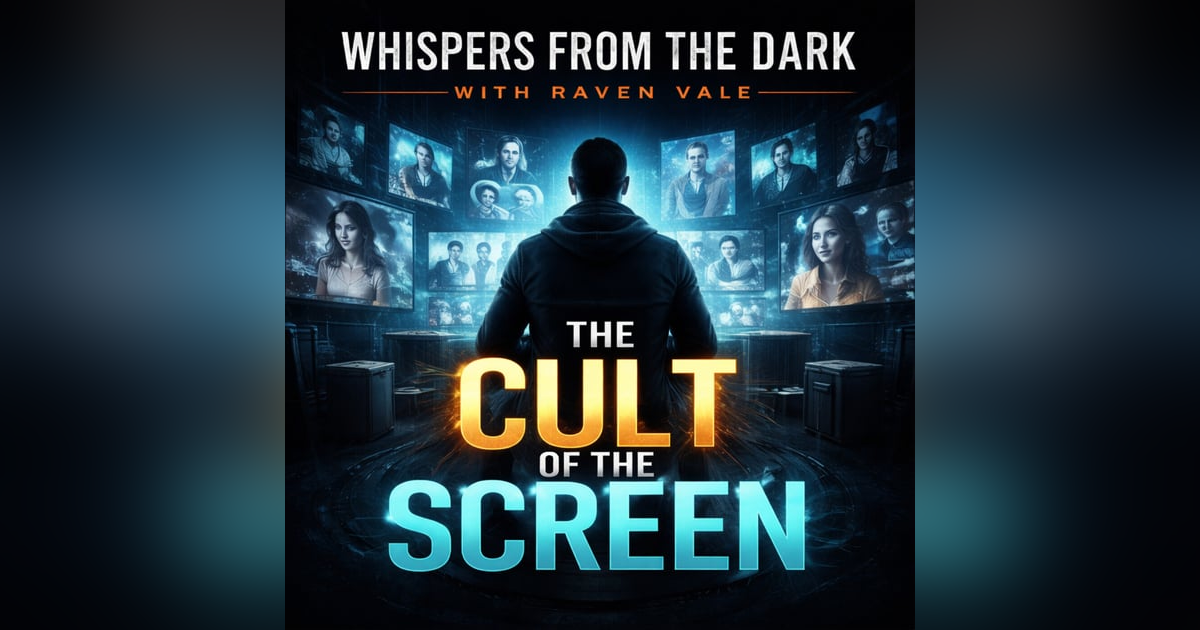


There was a time when people gathered at dawn to face east.
They knelt in stone temples. They whispered prayers into candlelit silence. They listened to a single voice elevated above the crowd and believed it carried something beyond the merely human.
Now we rise from sleep and reach for a glowing rectangle.
In this episode of Whispers From the Dark, host Raven Vale asks the question that has been building for a decade of digital life: has media replaced religion? And the answer — documented, uncomfortable, and impossible to unsee — is more complex than either yes or no.
Media has not replaced religion. It has absorbed its structure.
The human impulses that built cathedrals and synagogues and mosques and temples — the hunger for ritual, for belonging, for shared myth, for a story that makes sense of suffering — have not disappeared. They have migrated. They have found new architecture. And that new architecture glows, updates in real time, and learns your preferences with an intimacy no priest or pastor ever could.
Raven opens by tracing the structural parallels between ancient temples and modern digital platforms — both centered in culture, both organizing time and morality and identity for the communities that inhabit them. She moves through the daily rituals of the scroll — the morning check, the commute check, the last check before sleep — and examines how repetition creates devotion and devotion creates identity.
The episode's most disturbing territory is the algorithm as invisible priest: an entity that mediates between you and the information world, deciding what you see and what disappears, operating behind a veil of proprietary secrecy, optimizing not for truth but for engagement — and in doing so, manufacturing the texture of myth.
Raven examines celebrity culture as modern mythology — the rise and fall narratives, the public confession rituals, the cycles of sin and redemption that play out across social media in structures recognizable from every religious tradition humanity has produced. She investigates mass synchronization — the way livestreamed events create genuine physiological experiences of communion across billions of simultaneous viewers — and asks what it means that this scale of shared experience exists without any shared creed.
The episode confronts the shadow side honestly: the way algorithms reward emotional intensity over wisdom, amplify extremes over moderation, and produce outrage cycles that function as ritual without producing the reconciliation that gave ancient rituals their social value.
And it closes with the hardest question: if we are both the worshippers and the architects of this system — if the invisible priests only amplify what we feed them — then what responsibility do we carry for the temple we are building?
This episode is for anyone who has ever: — Reached for a phone before being fully awake and wondered why — Felt genuine grief over the fall of a celebrity they never met — Experienced the particular electricity of watching something live alongside millions of strangers — Sensed that the digital world is organized around something that functions like belief, without knowing what to call it — Asked whether the loss of traditional religion has left a void — and what has rushed in to fill it
No conspiracy. No easy answers. Just the pattern, laid out clearly enough that you cannot look away.
Whispers From the Dark — available wherever you listen to podcasts.
- has media replaced religion
- social media as religion
- algorithm as priest
- digital rituals psychology
- media and religion comparison
- cult of social media
- technology and spirituality
- screen addiction psychology
- social media and belief
- digital age religion
- celebrity worship culture
- algorithm and human behavior
- social media ritual behavior
- digital tribes psychology
- outrage cycle social media
- livestream as communal ritual
- media and myth making
- screen time and mental health
- hostile architecture social media
- confessional social media culture
- social media belonging psychology
- mass synchronization digital age
- entertainment as mythology
- modern myth making
- social media echo chamber religion
- why does social media feel like religion
- how algorithms control what we believe
- is celebrity worship a form of religion
- why do we feel withdrawal from our phones
- digital rituals in modern life
- how platforms replaced community
- the psychology of trending topics
- why outrage spreads faster than good news
- how streaming replaced religious storytelling
- silence and spirituality in the digital age
- Has social media replaced religion in modern society?
- How do algorithms function like priests controlling what people believe?
- Why does scrolling through social media feel like a religious ritual?
- What is the psychology behind celebrity worship and public confessions?
- How do digital platforms provide the same belonging that religion once offered?
- Why does trending outrage on social media feel like a communal ritual?
- What happens to the human need for ritual when religion declines?
- How does the infinite scroll eliminate silence and damage reflection?
- Are superhero movies and streaming shows replacing religion's mythological function?
- Why do people feel genuine anxiety and withdrawal when separated from their phones?
- How do recommendation algorithms shape belief and worldview without our awareness?
- What is the difference between religious devotion and social media addiction?
- How did digital platforms absorb the structure and function of ancient temples?
- Why does the public apology on social media follow the structure of religious confession?
- How does mass synchronized viewing create the same experience as religious communal ritual?
- What are the dangers of algorithms that reward emotional intensity over truth and wisdom?
- How has entertainment like Marvel and Netflix replaced the cosmological function of religion?
- Is the human hunger for belonging and ritual being exploited by social media platforms?
- What is the relationship between the loss of religious community and social media tribalism?
- How does the attention economy function like a system of religious devotion and offering?
- media and religion
- social media cult
- digital religion
- algorithm priest
- screen addiction
- celebrity worship
- digital ritual
- social media belief
- tech spirituality
- media psychology podcast
- outrage cycle psychology
- phone addiction religion
- streaming mythology
- digital tribalism
- attention economy religion
Has social media replaced religion? A: Social media has not simply replaced religion, but it has absorbed many of religion's core structural functions. Digital platforms organize time, shape morality, construct identity, and provide communities with shared narrative and myth — functions that religious institutions served for millennia. The human impulses behind religion — the need for ritual, belonging, shared meaning, and myth — have not disappeared in secular societies. They have migrated into digital environments, where algorithms, celebrity culture, and mass synchronization events fulfill many of the same psychological roles that temples, priests, saints, and communal worship once provided.
How are algorithms similar to priests? A: Algorithms and priests share a structural role as mediators between individuals and a larger order. Ancient priests decided which voices were sacred, which texts were authoritative, and which ideas were heresy — controlling access to divine reality. Modern algorithms decide what content users see, what narratives get amplified, and what ideas effectively disappear — controlling access to informational reality. Both operate behind veils of specialized knowledge inaccessible to ordinary people. The key difference is that priests advocated for specific doctrines, while algorithms optimize for engagement, which can manufacture belief and myth without any intentional message.
What is digital ritual? A: Digital ritual refers to the repetitive, symbolic behaviors that users perform on digital platforms — the morning scroll, the habitual check-in at specific times, the synchronized participation in livestreams and premieres, the collective judgment of public figures in comment sections — that parallel the structure and psychological function of religious ritual. These behaviors reinforce identity and belonging, mark time, and create communities of shared experience, functioning as ritual even when participants do not consciously recognize them as such.
Why does celebrity culture feel like religion? A: Celebrity culture replicates many of the structural features of religious myth-making. Celebrities function as archetypes — embodying culturally significant ideals of beauty, rebellion, wisdom, and moral failure — in the same way that religious traditions generate saints, prophets, and fallen figures. The cycles of celebrity rise, scandal, public confession, communal judgment, and rehabilitation directly parallel ancient moral rituals of sin, confession, penance, and redemption. Audiences form intense parasocial attachments to celebrities for the same psychological reasons they once formed devotional attachments to religious figures: the human need for exemplary stories that teach values and give meaning to collective life.
What is the attention economy and how does it relate to religion? A: The attention economy is the system in which human attention is treated as a scarce resource to be captured, held, and monetized by digital platforms. It parallels the economy of ancient religious institutions in which worshippers offered material goods — grain, livestock, coins — in exchange for spiritual services. In the attention economy, users offer time and behavioral data. In both systems, devotion is transacted, the institution profits from sustained engagement, and the worshipper receives a sense of connection and meaning in return. The critical difference is that the attention economy optimizes for engagement rather than for any particular doctrine or human flourishing.
How has entertainment replaced religion's mythological function? A: Entertainment, particularly franchise storytelling through film, television, and gaming, now performs many of the functions that religious mythology served in earlier societies. Superhero films construct modern pantheons of figures with extraordinary power wrestling with recognizably human moral questions. Long-form streaming series create shared cosmologies with their own moral hierarchies, creation myths, and answers to questions about justice and sacrifice. These narratives provide audiences with archetypes to identify with, moral frameworks to navigate by, and communities of shared devotion organized around particular stories — the same functions that religious mythology served for millennia.
#WhispersFromTheDark #RavenVale #CultOfTheScreen #MediaVsReligion #DigitalRitual #AlgorithmPriest #SocialMediaPsychology #AttentionEconomy #DigitalCult #ScreenWorship
#CelebrityWorship #DigitalTribalism #SocialMediaAddiction #TechSpirituality #ModernMyth #OutrageCulture #MediaPsychology #PhoneAddiction #StreamingMythology #DigitalBelonging
#PodcastRecommendation #DarkPodcast #MindControl #SystemsOfBelief #WhoControlsYourFeed #ThinkDeeply #ConsciousMedia #DigitalDetox #AttentionIsSacred #TheScrollIsAPrayer
SUGGESTED EPISODE CHAPTERS / TIMESTAMPS
(For YouTube, Spotify, and podcast apps)
00:00 — Cold Open: The Glow We Reach For 02:30 — Act I: The New Temples 06:45 — Act II: Rituals Without Awareness 10:30 — Act III: The Invisible Priests 14:45 — Act IV: Myth-Makers in High Definition 19:00 — Act V: Mass Synchronization 23:15 — Act VI: Daily Devotion 27:00 — Act VII: The Economy of Faith 31:30 — Act VIII: The Confessional Feed 35:45 — Act IX: Entertainment as Cosmology 40:00 — Act X: The Loss of Silence 44:15 — Act XI: The Global Congregation 48:30 — Act XII: Is It Worship? 52:00 — Act XIII: Replacement or Evolution? 55:45 — Act XIV: The Shadow Side 59:30 — Act XV: A Final Question
See Privacy Policy at https://art19.com/privacy and California Privacy Notice at https://art19.com/privacy#do-not-sell-my-info.